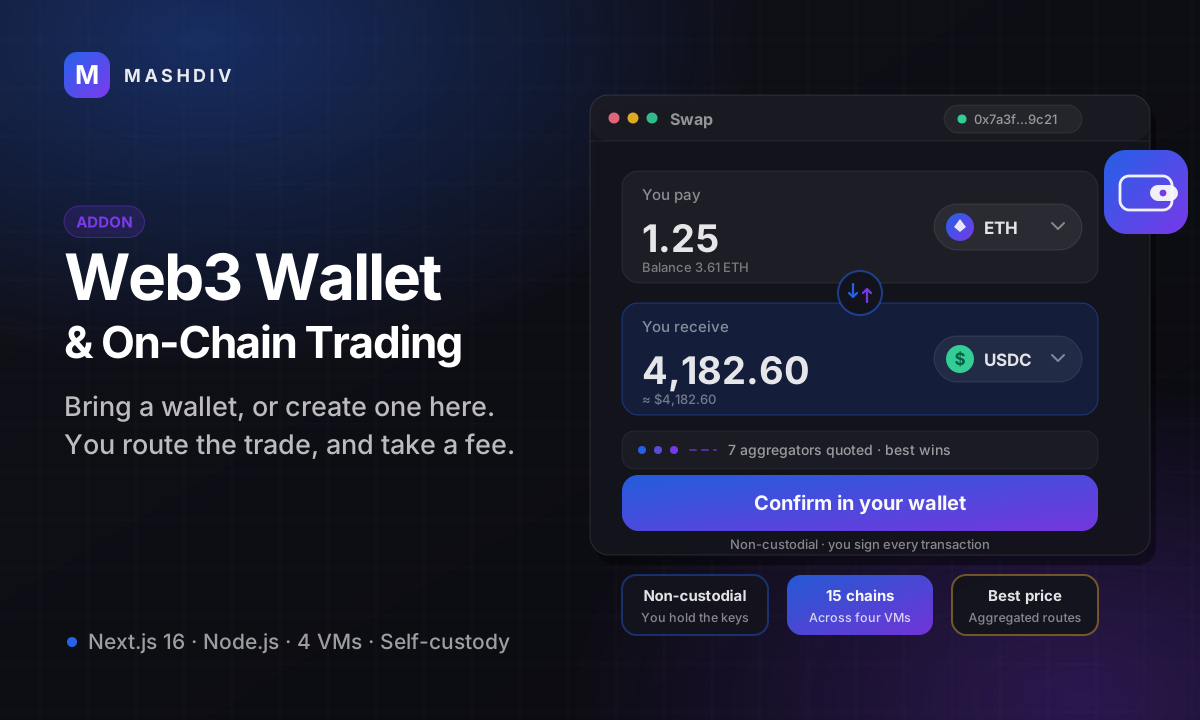
Web3 Wallet & On-Chain Trading
A self-custody wallet and an on-chain trading desk inside Bicrypto — you take a fee on every swap.
- Fifteen chains across four virtual machines — EVM, Solana, TRON and TON
- Seven liquidity aggregators quoted in parallel; the best net price wins
- Your fee, up to 3%, collected on chain into an address you nominate per chain
- A wallet users create in the browser — one phrase, four chains, no extension
- Keys are generated and encrypted in the tab; your server stores ciphertext only
- Works with the wallets they already have, over WalletConnect and EIP-6963
- A curated token catalogue with contract screening before anything is quotable
- Per-chain readiness that names the one thing missing instead of a red dot
- Your own liquidity pools, created and seeded from your wallet, never from ours
- A swap ledger with seven states, eight reasons and a one-shot reorg re-check
- Fourteen admin consoles, 34 permission keys and 71 settings across seven tabs
- Non-custodial by construction: no keys held, no contracts deployed, nothing signed
Inside Web3 Wallet & On-Chain Trading
A self-custody wallet and an on-chain desk, both inside your platform
Your users connect a wallet they already own, or make one here in under a minute. Seven aggregators are quoted in parallel across fifteen chains and four virtual machines, the best net result wins, and your fee is written into the transaction they sign. You hold no key, deploy no contract, and sign nothing.
In detail
Web3 Wallet & On-Chain Trading is two products in one licence. Your users get a wallet they create inside your platform — no extension to install — and a trading desk that prices every swap against aggregated DeFi liquidity on fifteen chains. You hold no keys, deploy no contracts and sign nothing, and you earn a fee on every trade that settles.
It is also the Web3 foundation the rest of your roadmap sits on. The chain registry, the wallet layer, the signing gate, the token allowlist and the fee ledger are shared infrastructure, so anything on-chain you add later starts from a wallet your users already have.
How it works
A user connects a wallet they already own — MetaMask, Rainbow, Trust, Phantom, TronLink, Tonkeeper, anything speaking WalletConnect — or creates one here in under a minute. Either way the key lives in their browser, never on your server. When they ask for a price, seven liquidity aggregators are quoted in parallel and the best net result wins, with your fee written into the calldata the user signs. They broadcast it; you never could. A confirmation poller then reads the receipt and files the swap under one of seven states.
Fifteen chains, four virtual machines
| VM | Chains | What is different |
|---|---|---|
| EVM | Ethereum, Optimism, BNB Smart Chain, Polygon, Base, Arbitrum One, Avalanche, Linea, Cronos, Rootstock, Fantom, Celo | Approve, then swap. Any address receives any token. |
| SVM | Solana | A token lives in a token account, one per mint, created before anything can arrive. |
| TVM | TRON | TRC-20 approvals, priced from SunSwap. |
| TON | TON | Jettons are per-owner contracts; the swap message is built server-side. |
What operators control
- Your fee in basis points, up to 3%, paid to a recipient address you nominate per chain
- A curated token catalogue on three independent axes — switched on, allowlisted, and what the screener thinks
- Slippage floors and ceilings, price-impact and notional caps, minimum liquidity, and a geo-block list
- Your own liquidity: file a pool against a trusted factory and seed it from your own wallet, to quote a pair nobody else will
- Fourteen admin consoles, 34 permission keys and 71 settings, so an analyst reads the books without touching the money
This is a Bicrypto addon and needs core v6.6 or later, a free WalletConnect project id, and at least one aggregator API key. Two things to plan for. Your fee accrues on chain to an address you hold, not to a platform wallet — it is not in your profit report until you move it and record the move, and a large accrued figure with an empty profit report is the system working correctly. And you cannot reverse anything: no admin button unwinds a settled swap, because the funds were never yours to move. The most an admin can do is stop offering new ones.
A wallet your customers do not have to install
Most people who would use an on-chain desk do not have MetaMask, and telling them to go and get one is where the funnel ends. This wallet is created in the browser: one BIP-39 recovery phrase, generated and encrypted in the tab with AES-256-GCM, so your server is handed an opaque envelope plus the public addresses — which is why a locked wallet still renders its portfolio. That one phrase covers all four virtual machines at their standard derivation paths, so it opens in Phantom, Tonkeeper or TronLink as well. It then announces itself over EIP-6963 and the Wallet Standard, which means the swap terminal, wallet sign-in and the NFT flows discover it exactly as they discover an installed extension — no branch, no second code path, nothing to keep in step.
Non-custodial in the strict sense: the phrase never reaches your server, so nobody on your side can restore a lost one. That is why the backup-and-verify step runs before the wallet is allowed to hold anything.
Your fee is collected on chain, into an address only you hold
You set a fee in basis points, up to the vendors' ceiling of 3%, and a recipient address for each chain. The aggregator collects it in the same transaction as the trade, so it never passes through a platform wallet — there is no platform wallet in this product. The revenue console then reports three separate figures: what has accrued at your address, what you have swept, and what has been booked into your profit report. They are separate on purpose. A large accrued figure with an empty profit report is the system working correctly: the platform holds no key for that address, so you move the funds yourself, record the transaction, and the settlement job books the revenue once it confirms.
A chain carrying a fee with no recipient refuses to quote rather than quoting at zero. The fee is baked into calldata the user has already signed, so trades that settled at zero can never be collected on afterwards — a refusal is one setting away from correct, and a silent zero is unrecoverable.
Nothing is quotable until you have said so three times
A token clears three independent axes before anyone can trade it: whether you switched it on, whether you allowlisted it, and what the contract screener thinks of it. They are deliberately not collapsed into one. Importing a token list creates rows that are pending and disabled — a list is somebody else's curation and this is your catalogue — and the on-chain decimals value is read at import, with any row that disagrees refused rather than stored, because a wrong decimals figure is not a display bug but an amount out by orders of magnitude. The screener runs a simulated buy and sell, reads the transfer tax and measures how concentrated the holders are, against warn and block thresholds you set.
Delisting is a denylist flag, never a delete, because historic swaps resolve their token through that row. You also decide what happens when the screener cannot answer at all: carry on, or refuse.
Quote the pairs no aggregator will touch — including your own token
An aggregator cannot price a token nobody has listed: your own token, a launch nothing indexes yet, a pair that exists in one pool on one chain. Direct pools answer exactly that case. You file a pool against a factory already deployed on the chain, and the console renders the create, approve, seed and withdraw transactions as calldata you send from your own wallet. The platform deploys no contract and signs no pool transaction — seeding from the custodial treasury would move customer-backing capital into a position only a signed withdrawal reverses. Once a pool is active and its verification is fresh it competes with the aggregators on the same quote, and every swap row records which venue kind filled it.
This is the one place in the addon where your own money is at stake. It is off by default, needs the Super Admin role to switch on, and a seed with no current risk acknowledgement is refused. V3 fees can be collected and booked; V2 fees accrue into the reserves and can never be told apart from principal.
When something is wrong, one screen names the one thing
Readiness is a checklist per chain rather than a dot: switched on, fee recipient, aggregator coverage and RPC, each of which reads OK, missing, unverified or unknown. The four values are load-bearing — folding unverified into OK is a console reporting readiness it never measured, and folding it into failed cries wolf on a healthy install. A probe talks to the chain instead of trusting your saved configuration, and the screen answers even while the master switch is off, because that switch is one of the things it reports. Afterwards the swap ledger does the same job in reverse: seven execution states and eight status reasons turn a ticket that says "it says dropped" into a row that says the customer's own wallet replaced it.
Reverted cost the customer gas; replaced did not. Dropped is usually their own speed-up or cancel, and reorged never is — reorged is also the only one with a revenue consequence for you, and it reverses the accrual when it happens.
- chains, four virtual machines
- 15
- aggregators quoted in parallel
- 7
- admin consoles, 34 permission keys
- 14
- keys held, contracts deployed
- 0
Everything included
81 capabilities, in 8 areas
Every item below exists in the source you receive. Nothing here is a roadmap.
The trading desk
What a customer does, from connecting a wallet to watching a transaction land.
- Connect any wallet that speaks WalletConnect, or create one here
- Swap on fifteen chains across EVM, Solana, TRON and TON
- Every eligible aggregator quoted in parallel on each route
- The best net result wins, not the largest headline number
- Approve-then-swap handled as one flow on EVM
- Wrap and unwrap the native coin, tracked like any other transaction
- Per-swap slippage, inside the floor and ceiling you set
- A price-impact warning before anything is signed
- Price charts on the pairs you feature, in the order you choose
- Live status of the transaction they have just broadcast
- Their own swap history, with an explorer link on every row
- A geo-block list and an optional KYC gate on the whole surface
The wallet users make here
A self-custody wallet with nothing to install — and the one seam that lets every existing screen use it unchanged.
- Created in the browser, with no download and no extension
- One BIP-39 recovery phrase across all four virtual machines
- Standard derivation paths — the phrase opens in Phantom or Tonkeeper too
- AES-256-GCM with PBKDF2-SHA512, performed in the customer's own tab
- Your server stores ciphertext and public addresses, and nothing else
- A locked wallet still renders its portfolio
- The vault syncs, so the same wallet is there on their phone
- Backup and verify before the wallet is allowed to hold anything
- Auto-lock, with the unlocked key held only in memory
- Balances per chain, native coins and tokens
- Send on EVM, Solana, TRON and TON, each assembled the way that chain needs
- A review sheet that decodes the calldata before any signature
- Fund it from the platform balance, or buy through your deposit gateways
- An operator adoption console that holds no addresses and no balances
Chains, venues and routing
Where a quote may come from, and what is checked before a customer is asked to sign.
- Fifteen chains: twelve EVM, plus Solana, TRON and TON
- Seven aggregator adapters, each with its own chain coverage
- Adapter priority and per-adapter on and off, from the console
- A credential test per adapter that never returns the value
- Per-chain RPC endpoints and confirmation depth
- A server-side RPC override that is never returned to a browser
- A router allowlist checked against the target and the approval spender
- The venue kind on every quote and every swap — aggregator or your own pool
- A quote log showing which provider won each route and why the others lost
- Minimum liquidity, maximum price impact and maximum notional per swap
Token curation and screening
The three axes a token must clear, and the contract checks behind the third.
- Status, listing and risk kept as three independent decisions
- Pending, allowlisted and denylisted as explicit curation states
- Bulk token-list import that allowlists nothing by itself
- On-chain decimals read at import; a mismatch is refused, not stored
- A simulated buy and sell, treating a reverted sell as a honeypot
- Transfer-tax warn and block thresholds, in basis points
- A holder-concentration warning threshold
- A maximum age for a screening verdict
- Re-screen any token on demand
- You choose whether an unreachable screener blocks or carries on
Your revenue
Where the fee is taken, where it sits, and how it reaches your books.
- An integrator fee in basis points, up to the vendors' ceiling of 3%
- A fee recipient per chain — an ordinary wallet or a multi-signature safe
- Three fee modes, shown read-only because they belong to the venue
- A fee status column that answers whether a chain earns, not whether it is on
- A per-chain zero-fee acknowledgement, recorded in words
- An accrual ledger that separates receipt-backed rows from estimated ones
- An on-chain reconciliation scan against what actually arrived
- Record a sweep; the settlement job books the profit once it confirms
- Sweep batch size and minimum-value floors
Your own liquidity
Optional, off by default, and the only place in the addon where your capital is at stake.
- File a pool against a factory already deployed on the chain
- Uniswap V2 and V3 style deployments, from a static registry
- Create, approve, seed and withdraw as calldata you sign yourself
- Pool verification with a freshness ceiling that stops a stale pool quoting
- Pool discovery that returns candidates and writes nothing
- Position analytics: net versus holding, and impermanent loss
- A quote-asset ledger for every position
- A risk acknowledgement that gates every seed, revocable and attributed
- Seed slippage and deviation guards, and a pool indexer with reorg rewind
Operations and support
The screens you open when something needs an answer.
- Per-chain readiness with four checks and four possible states each
- A live probe that talks to the chain instead of to your configuration
- A fee-wallet report that checks Solana token accounts, per mint
- One-tap creation of a missing Solana fee token account
- A swap ledger with seven execution states and eight status reasons
- A one-shot reorg re-check, with the ledger reversal it implies
- Manual re-poll of a single transaction
- 71 settings, 34 of them with a field, across seven tabs
- Scheduled jobs for confirmations, pool refresh and market data
Access control, and what nobody can do
Who may see what, who may move revenue, and the routes that do not exist.
- 34 permission keys across fourteen consoles
- Reaching a screen and writing on it are separate keys
- Five settings that need the Super Admin role, not merely a permission
- A save touching a protected key is refused whole, never half-applied
- Recording a sweep is its own key — the one that credits your books
- Registering a pool and seeding one are separate keys
- Every admin write audited, with a change of fee address timestamped
- No route anywhere moves funds, reverses a swap, or signs for a customer
- Licence
- Licensed addon, full source. Activated in the extension manager.
- Requires
- Bicrypto core v6.6 or later, licensed separately. Nothing else in this catalogue.
- Custody
- None. The platform holds no private key for this product and cannot sign, move or recover anything.
- Contracts deployed
- None. Pools are deployed by factories already on the chain, and every transaction targets a contract we did not write.
- Chains
- 15 — twelve EVM, plus Solana, TRON and TON, across four virtual machines.
- Liquidity
- Seven aggregator adapters, plus direct AMM pools you register and seed yourself.
- Admin surface
- 14 consoles, 34 permission keys, and 71 settings across seven tabs.
- Accounts you supply
- A free WalletConnect project id, an RPC endpoint for each chain you enable, and a fee address per chain.
- What it carries forward
- The chain registry, the wallet layer, the signing gate, the token allowlist and the fee ledger are shared infrastructure for anything on-chain you add later.
- No admin can reverse a swap
- There is no such route, because the funds were never yours to move. The most an admin can do is stop offering new swaps.
- Fee revenue is not automatic
- It accrues at your own address rather than in a platform wallet, and reaches your profit report only after you move it and record the transaction.
- TRON and TON pay no integrator fee
- Neither router has a fee parameter at all. What you take on those two chains is taken the way a direct pool takes it, or not at all.
- A Solana fee address is not enough
- An SPL token needs a token account per mint, and a valid recipient collects nothing until it exists. The Wallets console goes and looks, per mint.
- Two adapters need paid keys
- 0x and 1inch require an API key, and several vendors forbid commercial use on a free tier. Verify yours with a small swap before you count on the revenue.
- V2 pool fees cannot be booked
- They accrue into the reserves and are realised only on burn, so no on-chain fact separates fee from principal. Choose V3 if you want revenue that appears on a report.
- Chains are code, not configuration
- You configure the fifteen in the registry. You cannot add a sixteenth from the admin panel.
- No cross-chain bridging
- Deliberately out of scope. A bridge is two transactions on two chains with a window where the funds are in neither, and it needs its own record, poller and disclosure.
- No market depth or trade tape
- The swap list is your own platform's flow and is labelled as such, because presenting it as market flow would be a claim about liquidity that is not true.
Loved by customers
Reviews
No reviews yet. Own it? Share your experience.
Own this product? Sign in to leave a review.
Better together
Bundles containing this product
Get Web3 Wallet & On-Chain Trading for less as part of a bundle.
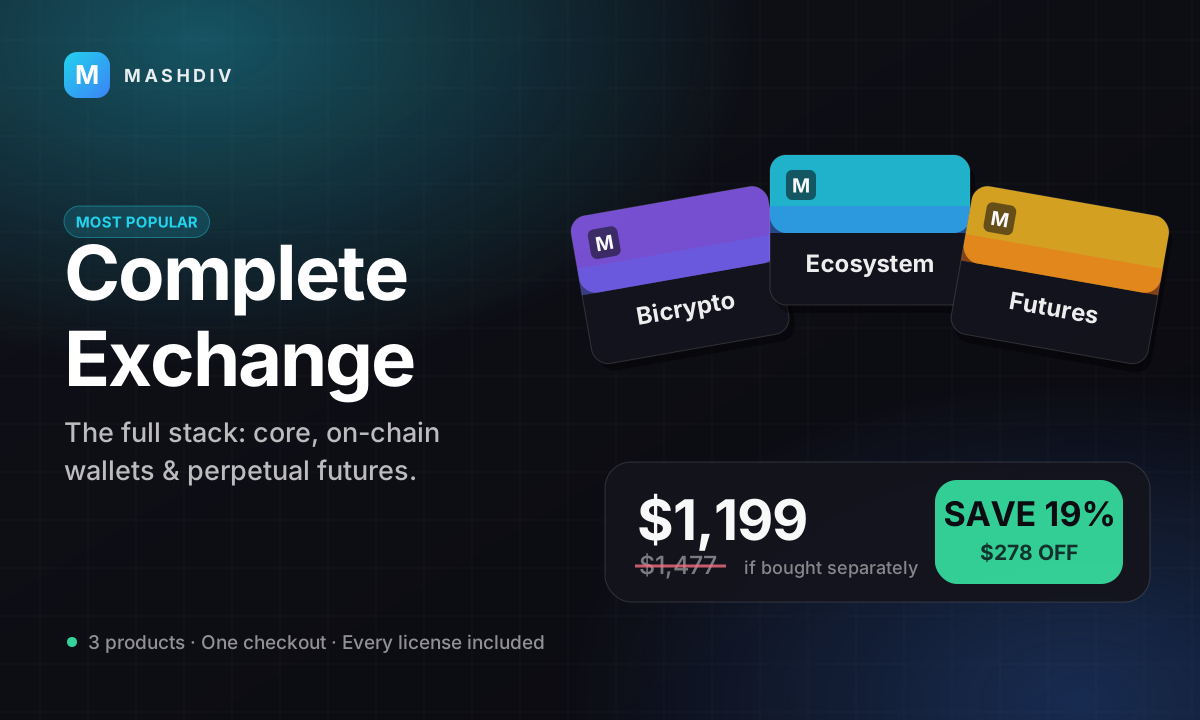
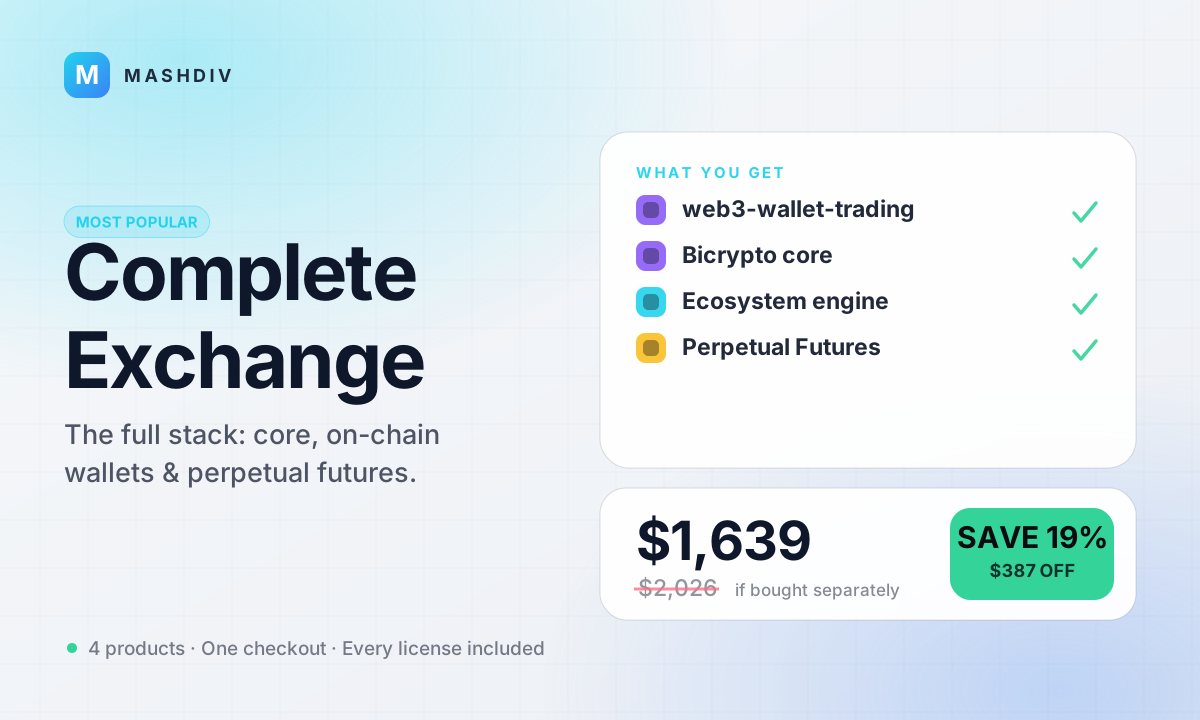 MOST POPULAR
Complete Exchange
Your own engine, your own chains, your own perpetuals, and an on-chain desk beside them.
- Web3 Wallet & On-Chain Trading
- Instant Convert
- Bicrypto
- Ecosystem for Bicrypto
- + 1 more
 ULTIMATE
Everything for Bicrypto
Every Bicrypto product we make — every addon, every chain, both apps, one price.
- Forex & Multi-Asset Trading
- Web3 Wallet & On-Chain Trading
- Instant Convert
- Hummingbot Connector
- + 30 more
Keep exploring
Related products
 Addon
AddonAI Investments for Bicrypto
A duration-based investment product where you set the term, the rate and the outcome — and fund it yourself.
 Addon
AddonForex Investment for Bicrypto
Run a managed forex desk: you set the plan, the term and the payout, and settlement runs itself hourly.
 Addon
AddonMLM & Affiliate System
Your members bring the next ones, and you pay commission only when a referral actually deposits or trades.